



The least of these, my brethren
The president of Black Power’s Whanganui chapter, Damien Kuru, is currently in prison for manslaughter. A jury found him guilty in the killing of Kevin Ratana, a Mongrel Mob member, even though he wasn’t…

The president of Black Power’s Whanganui chapter, Damien Kuru, is currently in prison for manslaughter. A jury found him guilty in the killing of Kevin Ratana, a Mongrel Mob member, even though he wasn’t…

Closing a Community Chapter. The Two Colossi of Ahuriri, Pat Magill and John Harre On Monday 24 April Pat Magill, my kaumatua Pākehā, tangata Tiriti, called a few of us together for a coffee at…

Denis O’Reilly’s community in Waiohiki, Hawke’s Bay, is one of many still reeling from Cyclone Gabrielle and the flooding. In this update, he writes about the continuing challenges, and why the census matters even…

Situation Report, Waiohiki, 1st March, 2023 Ranginui is relentless. The scale of devastation is vast. Behind what’s left of my home and down Omarunui Road it looks like the Somme. Individually and collectively our community…

( Waiohiki Flood Recovery-Givealittle ) I began this kōrero at Waipatu, Heretaunga, in Hastings, in the early morning hours of Saturday, February 18, 2023. The sun had not yet risen, but it will….
With submissions on the proposed Charities Amendment Bill closing a couple of days ago, Denis O’Reilly argues against the changing attitude towards charities and what he sees as the move away from a pragmatic,…

KNOX The following sermon, a panegyric for William Knockers Allen, was delivered on 7th November 2022 by Denis O’Reilly from the mahau, the front porch, of the whare Taamaki Makaurau at Ihumatao, Auckland, to members…

It’s a man’s game. Jacinda Ardern should take over the Warriors. After what was looking like becoming a troublesome season for the Labour team, she has made some tough calls over positional play. I’ll…

Last week I attempted to present to the Social Services and Communities Committee dealing with the ‘Oversight of Oranga Tamariki System and Children and Young People’s Commission Bill’. I am troubled by the intention…

Carl Bradley died suddenly last week. Just 52 years of age. He was a friend and colleague. Carl was an Aikido 4th Dan black belt and on an upward trajectory in his sport. He…
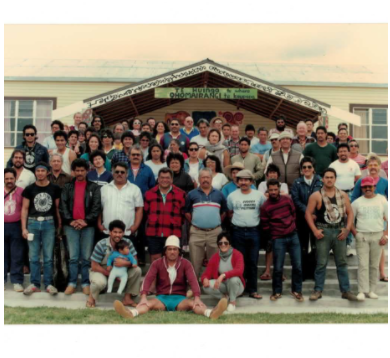
In the mid 1980’s when the Whakatu meatworks closed we ran a programme at Waiohiki to support workers made redundant by the extraordinary restructuring of our economy. Men and women who previously had been…

By Denis O’Reilly. Late last year I attended the unveiling for the late Hon. Parekura Horomia. Helen Clark gave a panegyric for her deceased acolyte. At the time of the tangihana itself, Helen was…

Denis O’Reilly is a New Zealand community leader and activist. This is his 91st essay for nzedge.com. My time as a bouncer on the door at Ali Baba’s in Cuba St Wellington, circa 1975,…

I’ve just returned from a full-on weekend in Auckland. I originally come from Timaru. My father used to say, on learning that I’d been in that city, “Did you call in on your aunt…

Recently announced United States Democratic Congressional Contender Richard Habersham enlisted New Zealander John Wareham, who splits his time between New Zealand and New York, to lead an oversubscribed weekend retreat for ex-offenders and ‘at…

Last Sunday a group of around 40 people gathered for breakfast at Lola’s Café in Waipawa to memorialise the death of James K Baxter, Hemi, friend and poet, on 22nd October 1972. One had…

Born 28-11-1958. Died 1-08-2018 Redemption Song On the second to last Monday…

It may have been the disconnection from his biological father that motivated Jim Anderton to champion the tribe of nga mokai, the fatherless ones. Then again it could have been a deep-seated instinct stemming…

This coming week and especially the day of 12 October brings memories of war to the fore. It is the 99th anniversary of the worst day in our nation’s…

64 Shots- leadership in a crazy world. Kevin Roberts, Chairman Saatchi & Saatchi. New York: Power House Books. The locus of this new book by Kevin Roberts is the here-and-now of a volatile, uncertain, complex,…
64 Shots- leadership in a crazy world. Kevin Roberts, Chairman Saatchi & Saatchi. New York: Power House Books. The locus of this new book by Kevin…

Social change activist and longtime NZEDGE columnist Denis O’Reilly weaves a multi-layered tale located on the social edge of Aotearoa. Last week I heard on RNZ a documentary interview with Rastaman Tigilau Ness

Hello. Its been a while. My heart is full. I’m in the mood to write. In recent times Taape and I have been trying as much as is possible to live out at Ocean Beach,…

Once you put something out there you just don’t know who will pick it up and where it will go. Since its birth in 2004 Nga…

As I approach my 60th year (next month) I’m increasingly reflecting on times past and what the hell I intend to do with the time…

Each morning I go for a swim. When at home, and whilst the weather is still warm enough, I use the seawater ‘pond’ at Ahuriri, a remnant of what was once the inner-harbour, Te…
Nga mihi. It’s a bit late to be saying Happy New Year and all that, but take my best wishes anyway. Well another sparkling Waitangi Day has passed with the synergy sapping ‘Harawira factor’…

It is said that those gifted with foresight often observe ‘tohu’, signs, portents of things to come. Recently we have witnessed a raft of missed signals in a range of circumstances across Aotearoa. In…
I love this time of the year in Hawke’s Bay, although it’s been a little bit different than usual weatherwise. I don’t know if these are natural portents of times to come or results…

My apologies for such a delay between posts. I’ve been no more flat out than usual but for some reason the muse seems to have deserted me and I’ve been struggling with expressing my…

We are in what looks to be the last few weeks of a protracted ‘Indian Summer’ in the Bay. It’s been very dry. We’ve had a few ‘close to frost’ mornings which killed the…
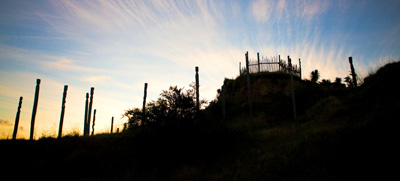
It’s been one hell of a start to the year. I left you last in January at the gates of Parihaka and I feel like I’ve been foot down and motoring hard ever since….
I love Aotearoa, the land, its people old and new. I’m just back from the 2010 Parihaka International Peace Festival and I can still feel the grin on my face like reverse botox. About…
It’s been one of those years. I feel like I’m still in planning mode and woosh, its gone, done and dusted. These last few months have given me the worst of times and the…
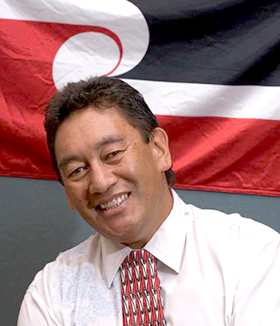
Let’s pass through the flack cloud of the moment: Hone Harawira and white mofos! We’ll take ‘white mofo’ first. Don’t get too upset about the terminology. I agree that it’s inappropriate language for an…
It was a cold, swine-flu ridden winter when I last wrote to you, and now is the time of fresh morning asparagus, drooping rich coloured kowhai, full throated tui, the tintabulations of the bellbirds,…
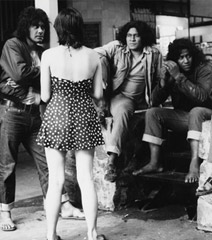
Every now and then the various streams of our lives seem to conflate, one layer tumbling in on another, old times hurtling back from the past and crashing into the present regardless of how…
It’s been grim-times at home in Taradale, and that’s more than the recession or a bit of shitty weather. Last weekend, the first in May, a local bloke, Michael Meehan, was shot dead at…
What happened to March? My calendar accelerated and it just went. One minute I was planning for St Paddy’s Day and the next thing I know it’s been, gone, and done for. The ginko…
Welcome to 2009. May it go well for you and yours. I’ve had a great start. I was pretty stuffed at the end of last year, but a bit of time off and a…
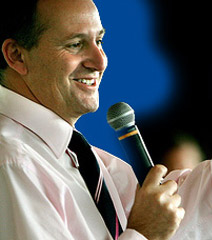
The wonderful thing about those of us who enjoy democracy, we are currently told, is that we enjoy the fruits of an orderly and peaceful transfer of power between governing regimes. I’ve got to tell…
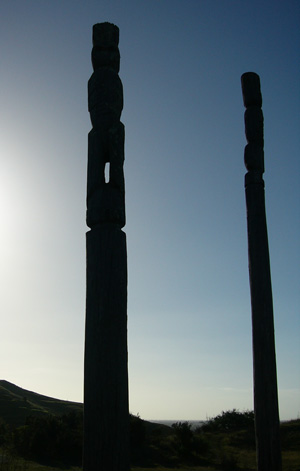
Ka nui te mihi ki a koutou mo te ra whanau a Hehu, me te Tau Hou, hoki. Merry Christmas and a Happy New Year. My mate wished me ‘Happy Holidays’ the other day…
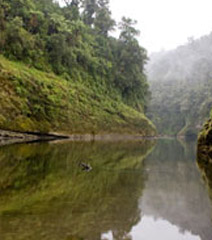
I start this blog on Labour Day. I’m just back at Waiohiki from a Black Power hui near Rotorua, including a challenge for the Gabe Tawhaiti – and I’ll come back to that in…
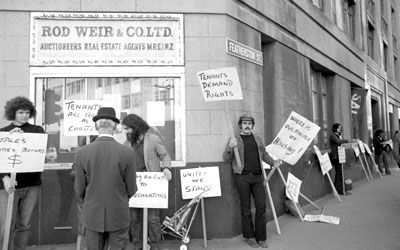
When I was a young activist in Wellington I attended a function in Auckland at which the lead presenter was a bloke from Brazil called Paulo Freire. At the time I was much into…
It’s spring. The kowhai has begun to blossom and on this, the last day of the month, a sunny Sunday in the Bay, I picked the first asparagus of the season. Seasons are cycles,…

First, we’ll visit the ossuary. Tam Wong Shi, my friend Harry’s mum, reached her terminal milestone of 103 years a few weeks ago. Her journey in life sounded tough: married in feudal China at…
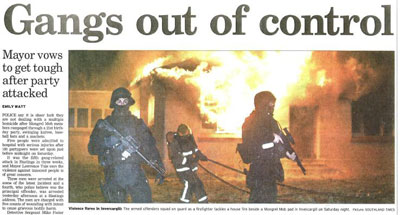
There’s a scrap between the Mongrel Mob and the Road Knights in the deep South and the Mayor of Invercargill is calling for ‘Sheriff Joe’ style retributive justice. There’s a scrap between…

I start this blog on a Friday night in mid April and I’ve not long pulled into the homestead at Waiohiki after a long long drive to…
So, that was Easter. What a buzz all round. The stone at the sepulchre door has been shifted, and an impossible calendar of commitments has been …
At home, the colour of the grapes has changed rapidly. In December they were a wistful light green and now, swollen with juice, they are rich …

It’s Friday, a weekend out from Christmas, and I’m still on the road: Auckland for a multi-gang meeting, Taiwhakaia in the Bay of Plenty for a …
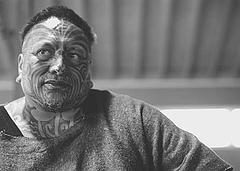
Let’s deal with the alleged terrorism and Tuhoe issue. The last sounds heard by those at the controls immediately prior to the airship tragedy at Mt Erebus reportedly were “Whoop whoop, pull…
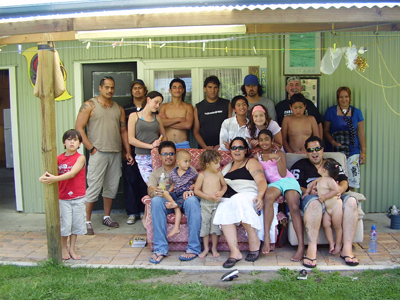
My spirit is revived. I feel as if I am in what the priests of my youth would call ‘a state of grace’ (although, in truth, the good Lord may consider this to be…
I left you last as I was on my way to the inaugural Parihaka International Peace Festival. There is something uplifting about the name Parihaka itself. For me it triggers memories of the early…
Kia ora. Nga mihi o te tau hou. We’re well into the first quarter and people are still wishing each other “Happy New Year” which just goes to show how slowly the nation re-engages…
Contact | Privacy | Terms of Service | Advertise | Google+ © Copyright NZEDGE 1998-2026

